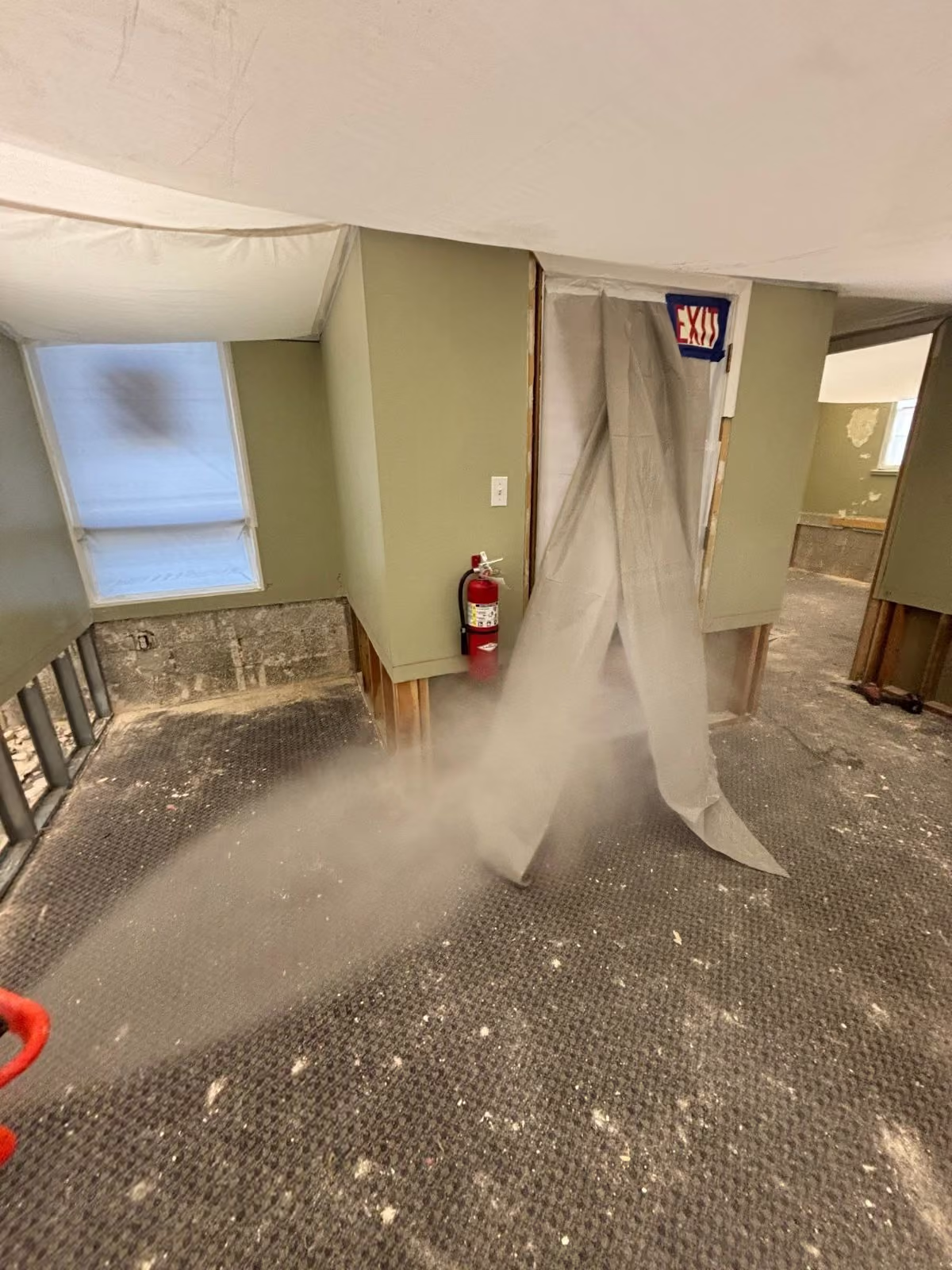
A short-term rental turnover in Park City or Heber should include a water check: labeled shut-offs, every supply line, the hot tub, the water heater, a heat setting that keeps the house from freezing, and one named person who checks between guests.
It matters more on the Wasatch Back than in most rental markets. Units in Deer Valley, Kimball Junction and Old Town can sit empty for days between bookings, and hard freezes reach Heber and Midway well before the lifts open. If a leak ever gets ahead of the checklist, call Highwater Restoration 24/7, and we'll help you navigate the claim with the owner and the insurer.
Why turnovers are the right time to check
Guests run every fixture harder than most owners would, then leave. The cleaner who arrives next is often the only person inside before the next check-in, so the turnover is the one reliable moment to catch a small problem while it is still small.
A slow drip found by the cleaner is a repair. The same drip found by the next guest is a canceled stay and a drying job. Water that soaks into drywall, carpet pad or subfloor can start growing mold within 48 to 72 hours, and with a freeze event the damage is immediate, so the check belongs in every turnover, not once a season.
The turnover water checklist
Add these items to the cleaning app or the binder in the owner's closet.
Shut-offs
Anyone who cleans or checks the unit should be able to stop the water without calling someone first.
- A labeled main shut-off: a tag on the valve and a note in the binder saying where it is.
- Fixture valves that turn: valves under sinks and behind toilets seize when nobody touches them, so turn each one once a season.
- The tool in place: if the main needs a wrench or a key, keep it hanging beside the valve.
Supply lines under sinks and behind appliances
Supply lines usually fail slowly before they fail all at once. The turnover is when to catch the slow part.
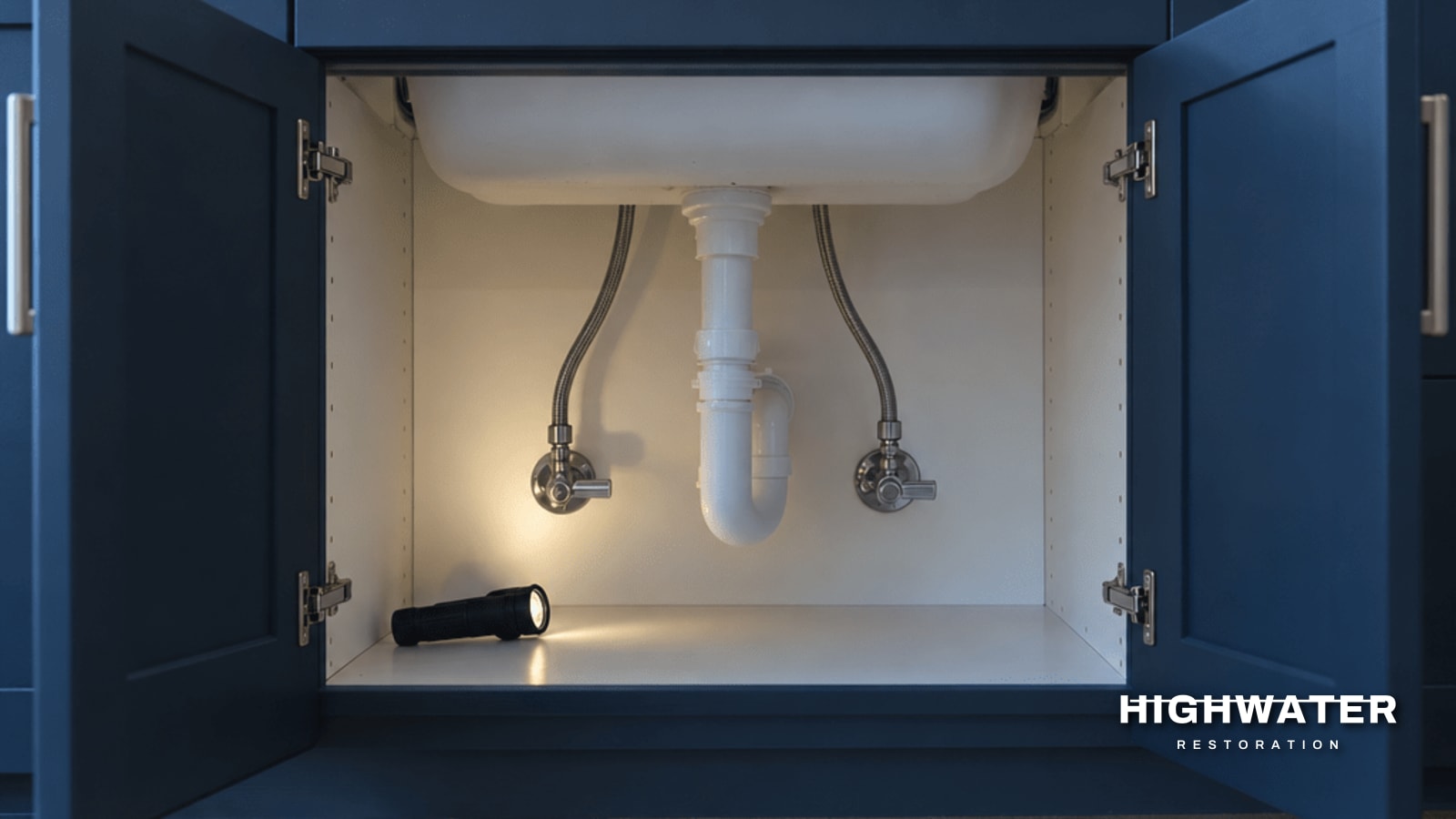
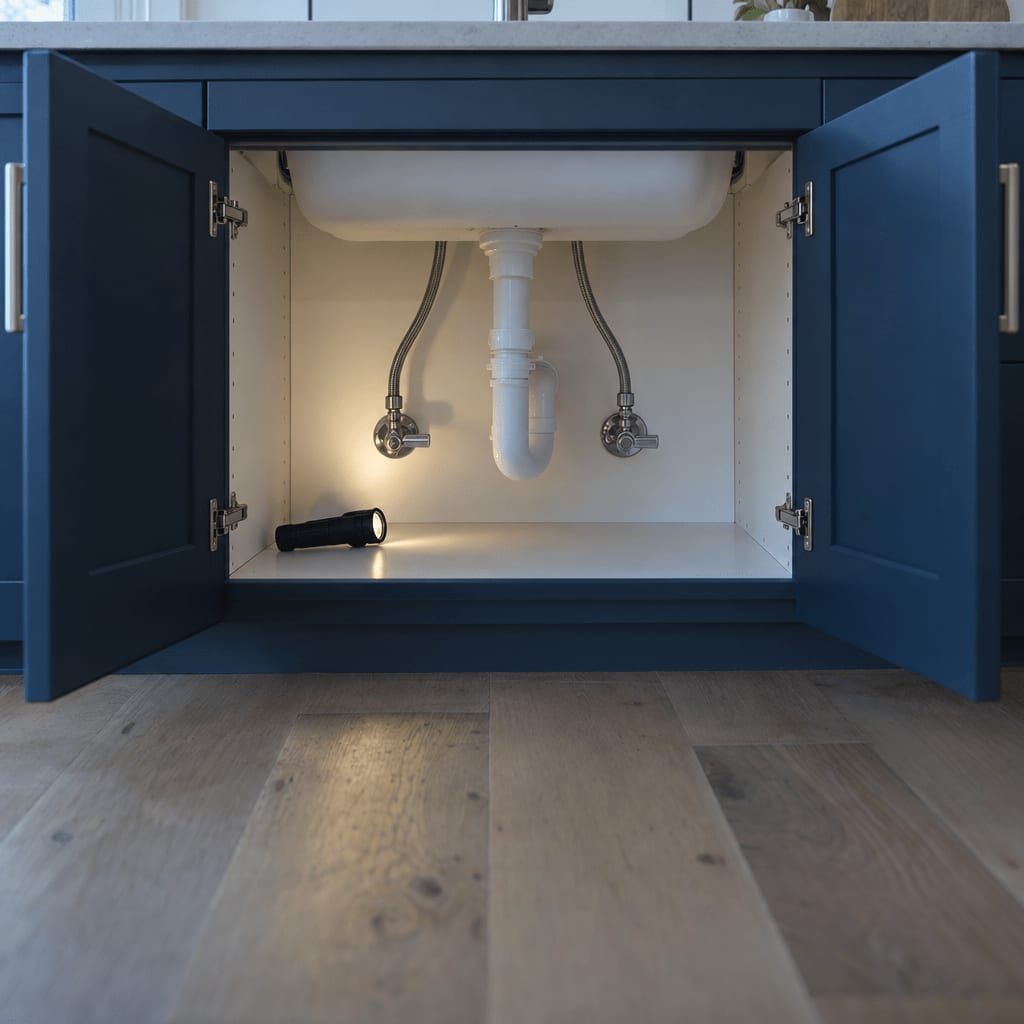
- Under every sink: look for drips at each connection and feel the cabinet floor for damp or swelling.
- Toilets: check for moisture at the valve and the base of the tank.
- Washer, dishwasher and fridge: look for staining or warped flooring along the front edge of each, and swap rubber washer hoses for braided stainless ones.
The hot tub
Guests use the hot tub hard and rarely report small problems with it.
- Level, cover and heat: confirm the water is at the fill line, the cover is strapped down, and the tub is heating and circulating. A tub that stops circulating in a cold snap can freeze.
- The equipment bay: open the side panel and look for water on the cabinet floor or a white crust on the fittings, which marks a slow leak.
- Draining between stays: a drained tub in freezing weather needs to be winterized, not just emptied.
The water heater
It lives in a closet guests never open, which is why it gets missed.
- The base and the pan: look for damp, rust or mineral crust.
- The relief valve pipe: it should be dry at its end. Water there means the valve has opened and a plumber should look.
The heat setting
Heat is the cheapest water protection a rental has.
- A floor guests cannot override: set the thermostat's lowest allowed temperature so the house stays at 55°F or warmer.
- Windows closed: cold air through a cracked window beside a kitchen or bathroom wall can freeze a line overnight.
Our October freeze checklist covers the rest of the house.
Who checks between guests
A checklist only works when someone owns it.
- One named person per unit: the cleaner, the property manager or a property watch service, written into the schedule.
- A photo at each turnover: under the kitchen sink and at the base of the water heater, for a dated record.
- A clear next call: the cleaner knows who to call the moment they find water, and that person gets help the same day.
For units that sit empty longer, our guide to second homes in Park City in the off-season covers leak sensors and automatic shut-off valves.
When a guest reports a leak
When a guest calls about water, the order of the first steps matters most.
- Stop the water: tell the guest where the nearest valve or the main shut-off is, and ask them to turn it off only if it is safe.
- Keep clear of wet electrical: ask them to stay away from outlets and cords in the wet area, and out of any room where water is coming through the ceiling.
- Get photos before anything moves: ask for a few photos of the source and the spread, and have your own person take more on arrival.
- Call for mitigation that day: in a mountain unit in winter, water is not a next-morning job.
- Look after the guest: decide whether the stay can continue in a dry part of the unit, and tell them what happens next.
- Tell the owner: share what you know and who is coming. The claim conversation starts here, and we'll help you navigate it.
Our guide on what to do first in a water emergency walks through the same steps in more detail.
Highwater serves rentals across the Wasatch Back. The Park City service page and the Heber City page explain the water risks particular to each area, from ice dams to cold valley nights.
Call Highwater Restoration 24/7 for water damage help in Park City, Deer Valley, Kimball Junction, Heber City, Midway and Kamas.
Frequently asked questions
Short answers to common questions about turnovers and leaks.
What should my cleaners look for during a turnover?
Water where it should not be, and signs that it has been there: damp or swollen cabinet floors, drips at supply line connections, bulging washer hoses, staining at the front of the dishwasher or fridge, water in the hot tub's equipment bay, and rust at the base of the water heater. Ask them to photograph and report anything unusual the same day.
How long does it take to get a rental unit back online after a leak?
It depends on how far the water traveled and what it soaked. A small, clean leak caught early can sometimes be dried in place, while water that reached the subfloor or a ceiling below takes longer. We set the timeline by moisture readings, tell you plainly when a unit should stay offline, and help you navigate the claim with the owner.