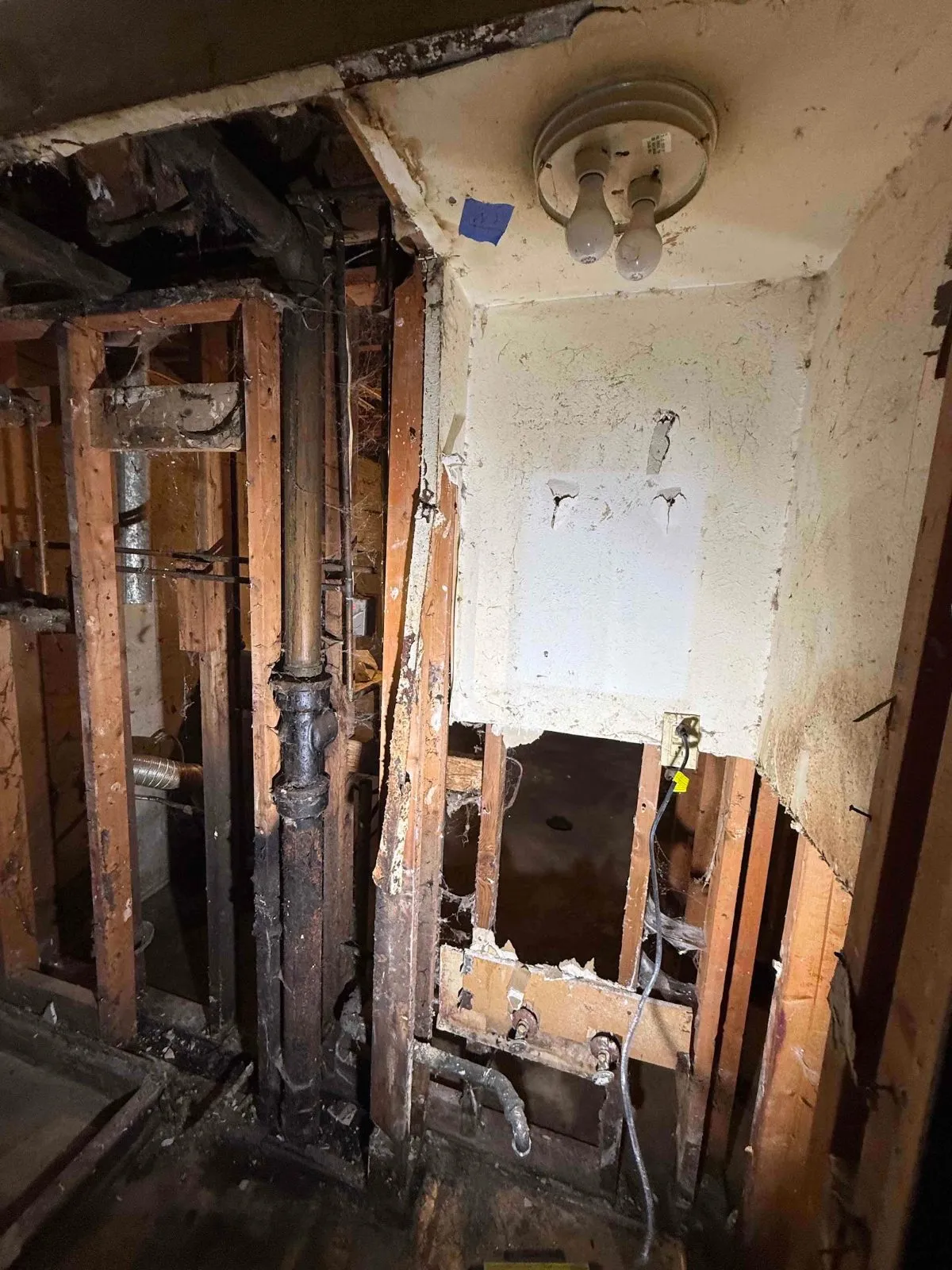
A sewage backup is Category 3 water, the restoration industry’s term for water carrying bacteria, viruses, and parasites. That classification changes everything about how it gets cleaned. The first 24 hours decide how much of your basement can be saved and how cleanly the insurance claim goes.
The short version Stop using water, keep people and pets out, don’t run fans or the HVAC, photograph everything, and call a certified crew. Everything else can wait for them.
Step 1: Stop adding water
Every flush, shower, and load of laundry upstairs drains to the lowest opening, which is usually the floor drain that just overflowed. Tell everyone in the house: no water until the line is cleared. If a toilet or tub on the lowest level is still bubbling, a main line blockage is likely, and that is a plumber’s call before it is ours.
Step 2: Keep everyone out
Raw sewage is a health hazard even in small amounts. Keep children, pets, and anyone pregnant, elderly, or immunocompromised out of the area entirely.
- Don’t wade in. If the water reaches outlets or appliances, shut power at the breaker only if you can reach the panel without stepping in it.
- Close the door to the basement and turn off the furnace or HVAC if returns are in the affected space.
- Skip the fans. Moving air spreads aerosols and speeds up odor absorption into drywall and framing.
Step 3: Document before anything moves
Your adjuster will want to see the damage as it was. Take wide photos of each wall, close-ups of the waterline, the drain or fixture that overflowed, and every damaged item. A 60-second video walking the room helps too. Do this from the stairs if you can.
Sewage in the basement right now? Call us first.
Why this isn’t a shop-vac job
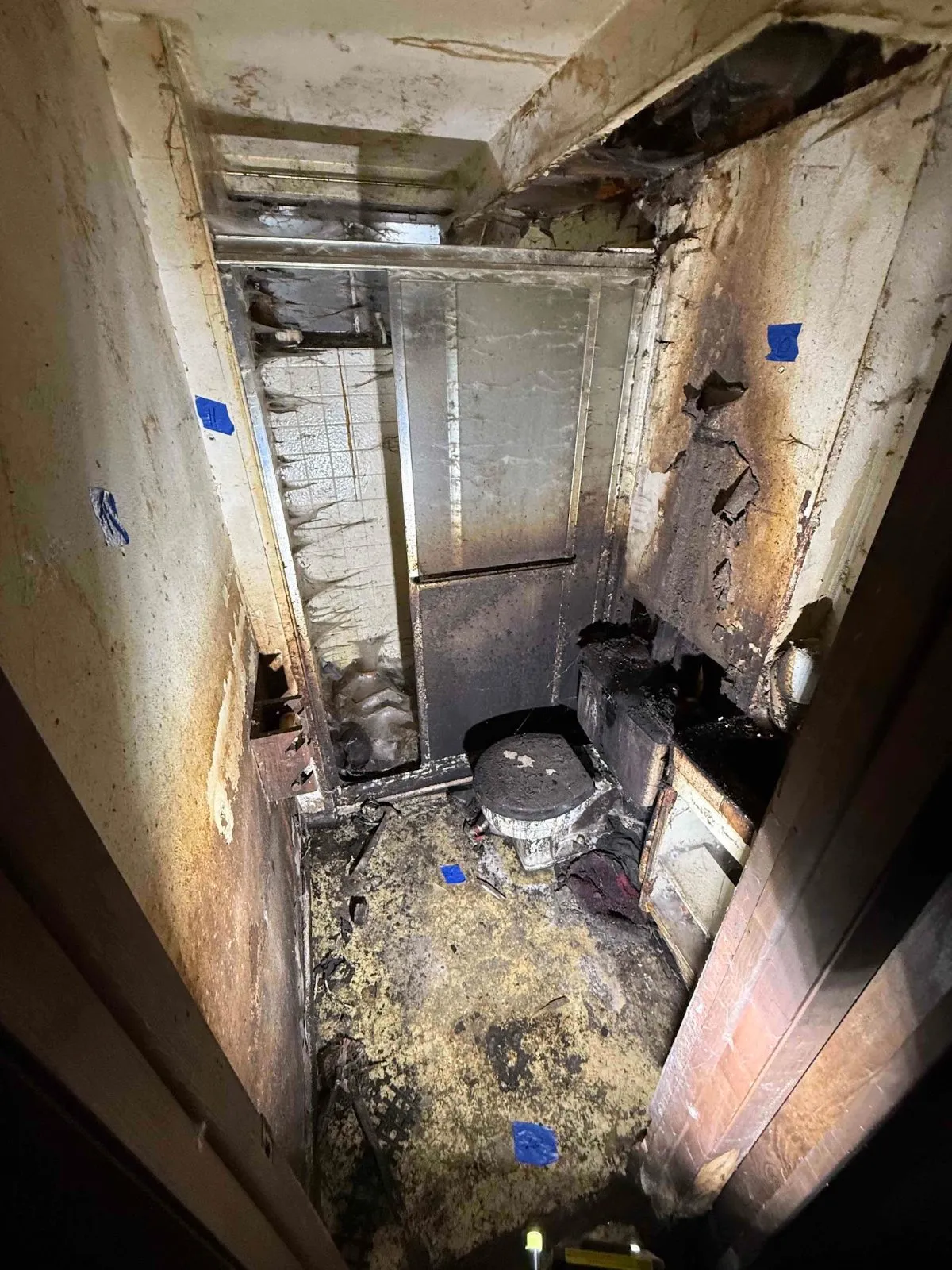
Clean-water leaks can sometimes be handled by a homeowner. Sewage can’t. Anything porous that touched Category 3 water, like carpet, pad, drywall, insulation, and particle board, has to be removed and disposed of. Hard surfaces get cleaned, disinfected, and tested. Doing it halfway leaves contamination inside the walls, and it can complicate the coverage you would otherwise have.
What a proper sewage cleanup looks like
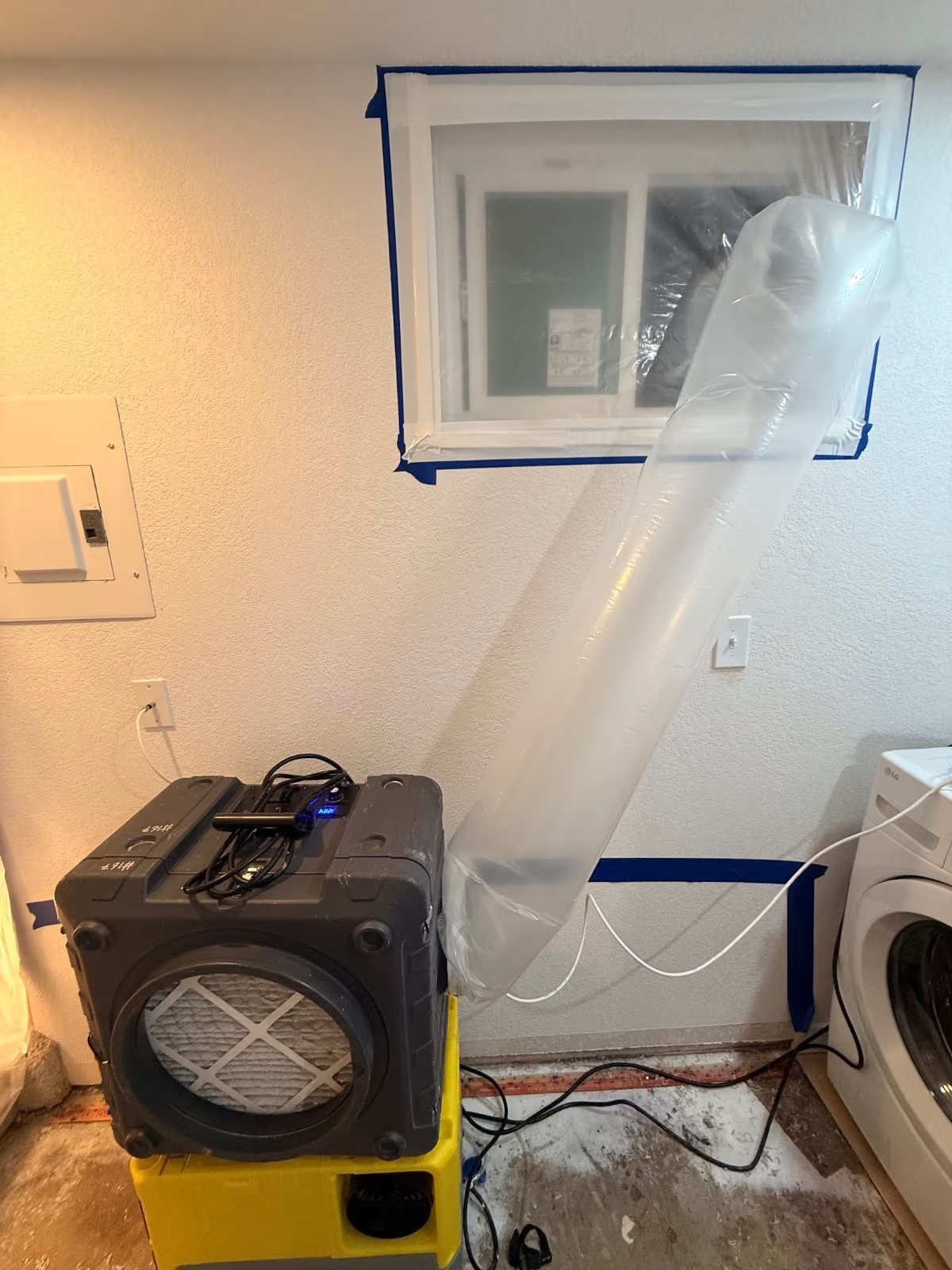
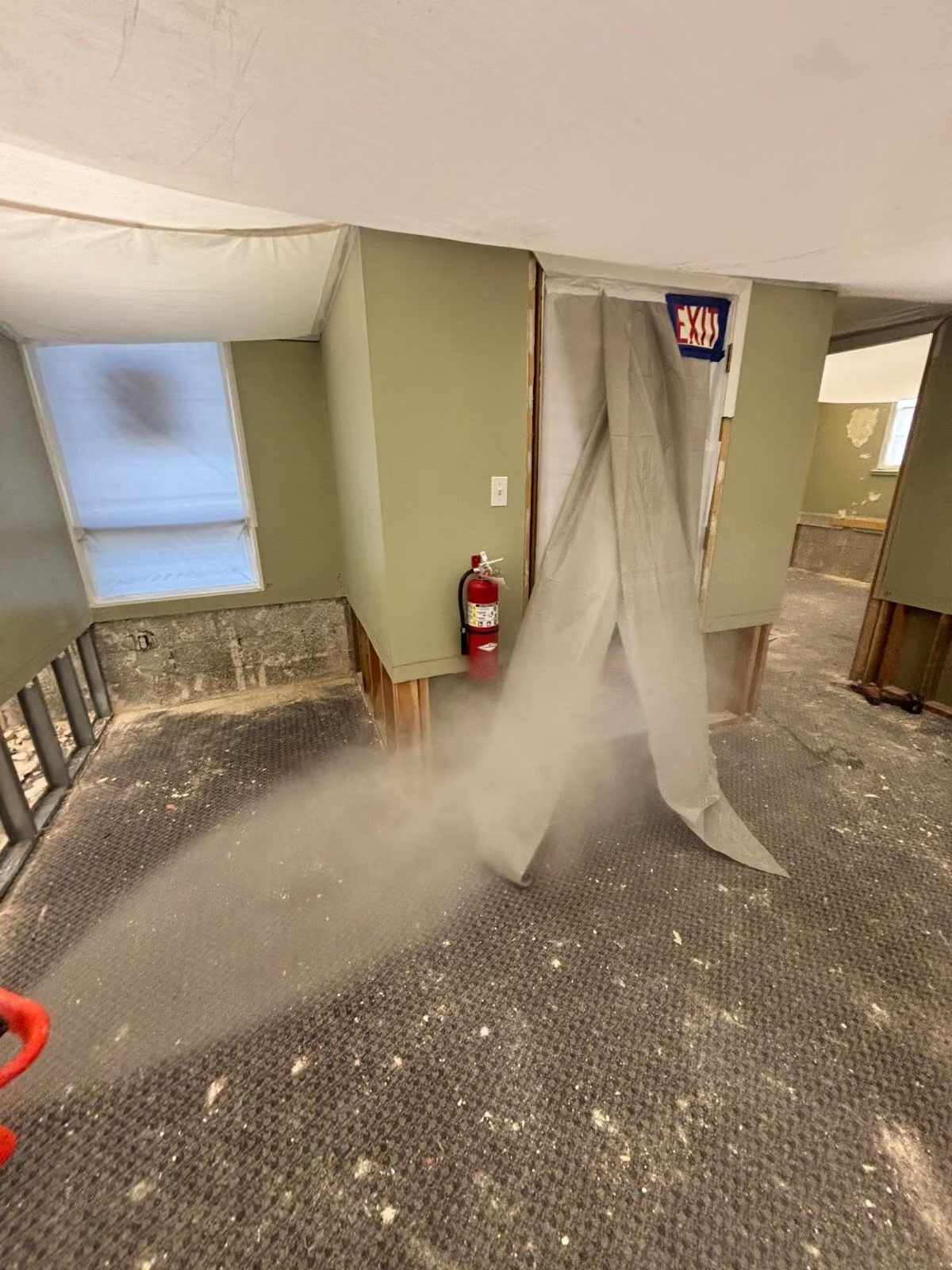
- Containment and PPE The area is sealed with poly sheeting and negative air so contamination stays in the basement.
- Extraction Standing sewage is pumped out and disposed of properly, never down a floor drain.
- Removal Porous materials are cut out, typically 12 to 24 inches above the wick line on drywall.
- Clean, disinfect, dry Hard surfaces and framing are cleaned with EPA-registered antimicrobials, then dried to standard with daily readings.
- Verify and rebuild Moisture and surface testing confirm it’s clean before anything is closed back up.
On most basements we see across the valley, mitigation takes three to five days. Our sewage backup cleanup in Salt Lake page covers the process and equipment in more detail.
Will insurance cover it?
It depends on one line in your policy. Most standard homeowners policies exclude water that backs up through sewers or drains unless you added a water backup endorsement. Many Utah homeowners have it without knowing, often with a separate limit. Check your declarations page, or send it to us and we’ll read it with you.
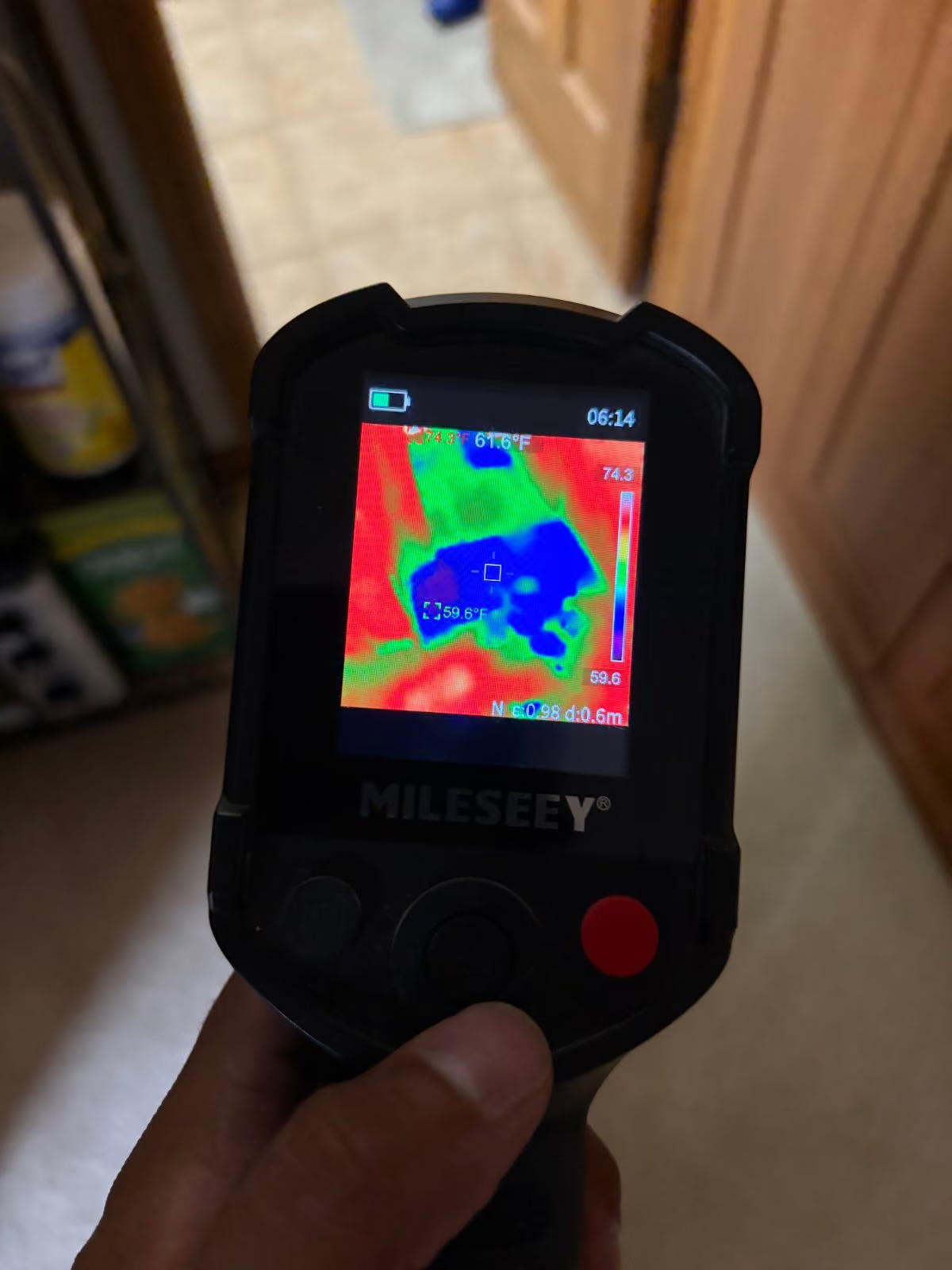
Either way, we document the job the way adjusters need it: moisture maps, photos, and an Xactimate scope. We bill your insurer directly so you aren’t fronting the cost.
Keeping it from happening again
- Have the lateral line camera-inspected, especially in older homes in Sugar House, Holladay, and Millcreek where roots and clay pipe are common.
- Install a backwater valve on the main line if your basement sits below the street.
- Keep grease, wipes, and paper towels out of every drain.
Lead technician at Highwater, IICRC certified in water restoration and applied microbial remediation. Jake has run Category 3 jobs across the Salt Lake Valley for over a decade.