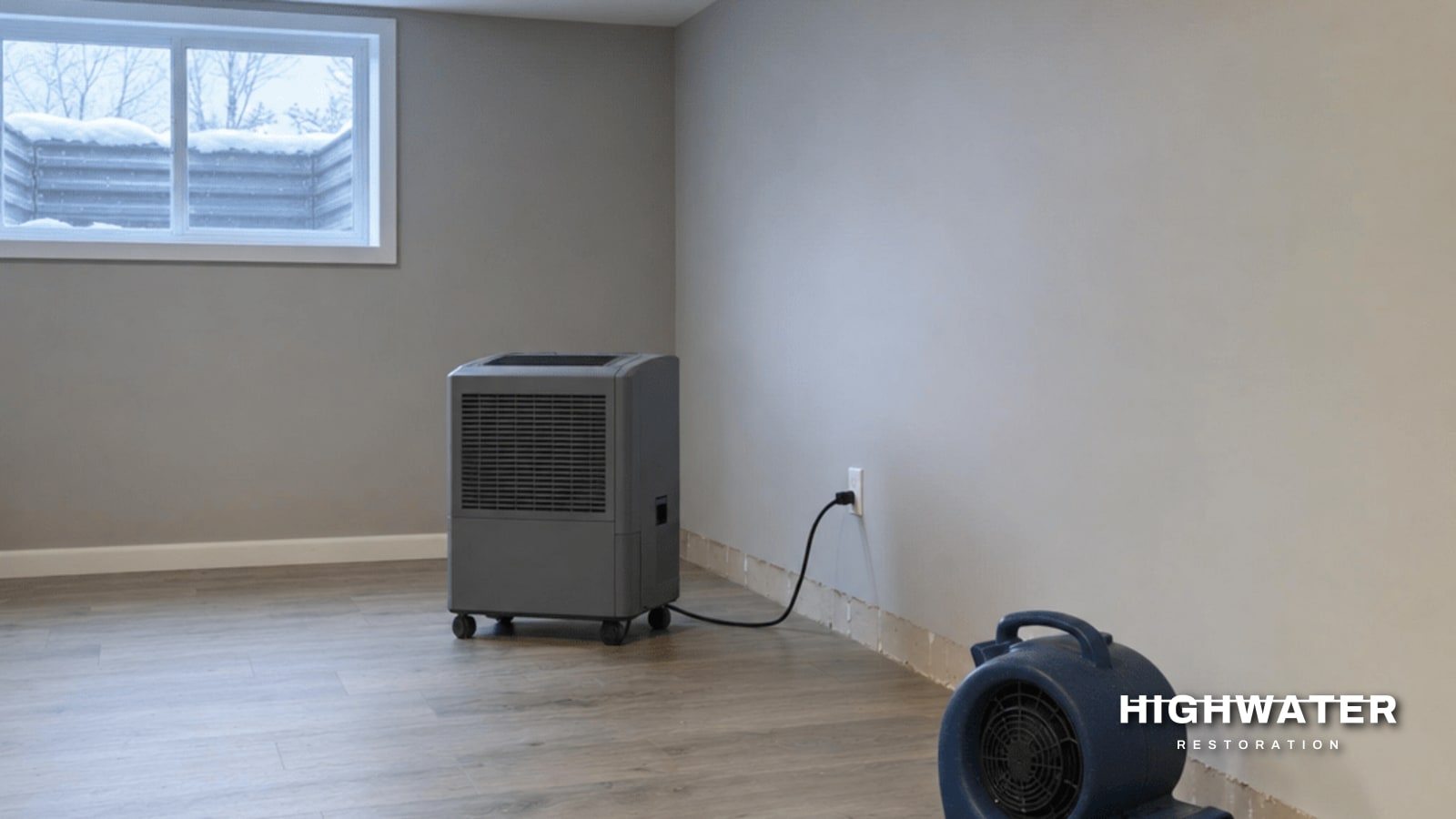
Water mitigation is the work that stops water damage from growing: the water is removed, anything that cannot be saved comes out, and the structure is dried and measured until the readings show it is dry. It comes before any rebuild, and moisture readings, not the calendar, decide when it is finished.
If you live in the Salt Lake Valley or up in Park City and Heber, this guide walks through what happens once the standing water is gone: the first moisture map, why the equipment sits where it does, what the daily readings decide, and what you and your adjuster get from them. When a claim is involved, we'll help you navigate it from the first day.
Water mitigation and the rebuild are two different jobs
People often use "restoration" for everything that happens after a leak, but the work splits into two stages.
Mitigation is about stopping the damage. That means extracting the water, removing materials that cannot be dried or are no longer safe, setting up drying equipment, and checking the structure every day until it is dry.
The rebuild is about putting the home back: new drywall, paint, flooring, trim or cabinets where something had to come out. It starts only after mitigation is finished, because closing up a wall that is still wet traps the water inside, where it can grow mold and come back as a stain or a smell.
Keeping the two apart matters for your claim too. Your adjuster looks at the drying records to understand why each piece of the home was dried in place or removed, before anyone prices the rebuild.
Day one: the moisture map
Before any equipment goes in, the wet area is measured. What you see on the surface is rarely the whole picture, because water runs under flooring, wicks up drywall and spreads along the framing inside the walls.
The first visit usually includes:
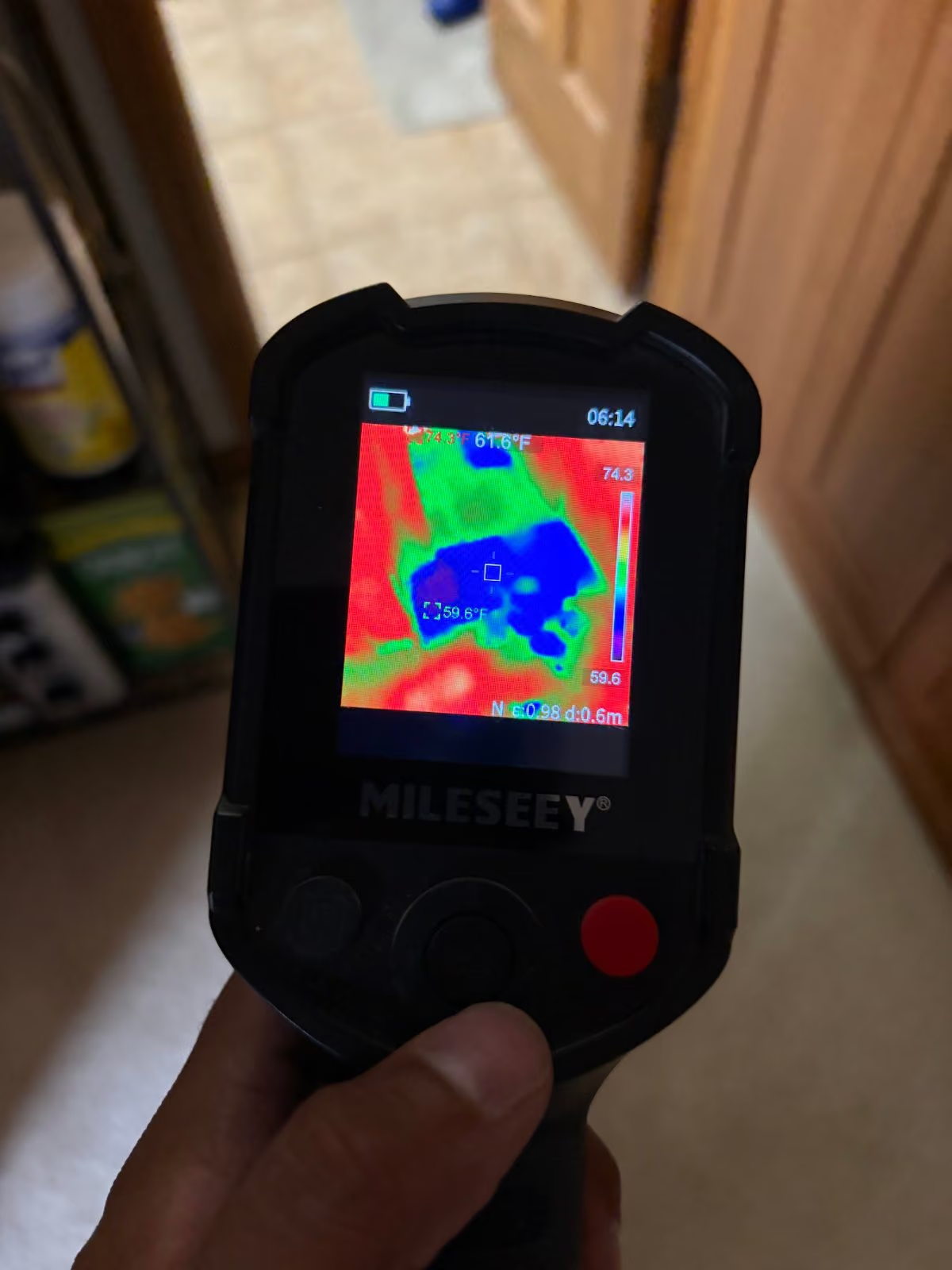
- A thermal camera scan: it shows cooler patches where water may be evaporating, which tells the technician where to measure. It points to moisture but does not prove it, so every spot is checked with a meter.
- Meter readings: pin meters measure inside wood and drywall, and pinless meters scan across floors and walls without leaving holes.
- A dry reference: the same material in an unaffected room is measured too. That number becomes the drying goal for the wet areas.
- A map: readings are written down by room and location, often on a simple sketch of the floor plan, so each day can be compared with the one before.
If you want to know how wet materials are grouped by how far the water has spread, our guide to water damage classes 1 to 4 explains it, and the guide to water categories 1, 2 and 3 covers how clean or dirty water changes what can be saved.
Why the equipment goes where it does, and why it stays
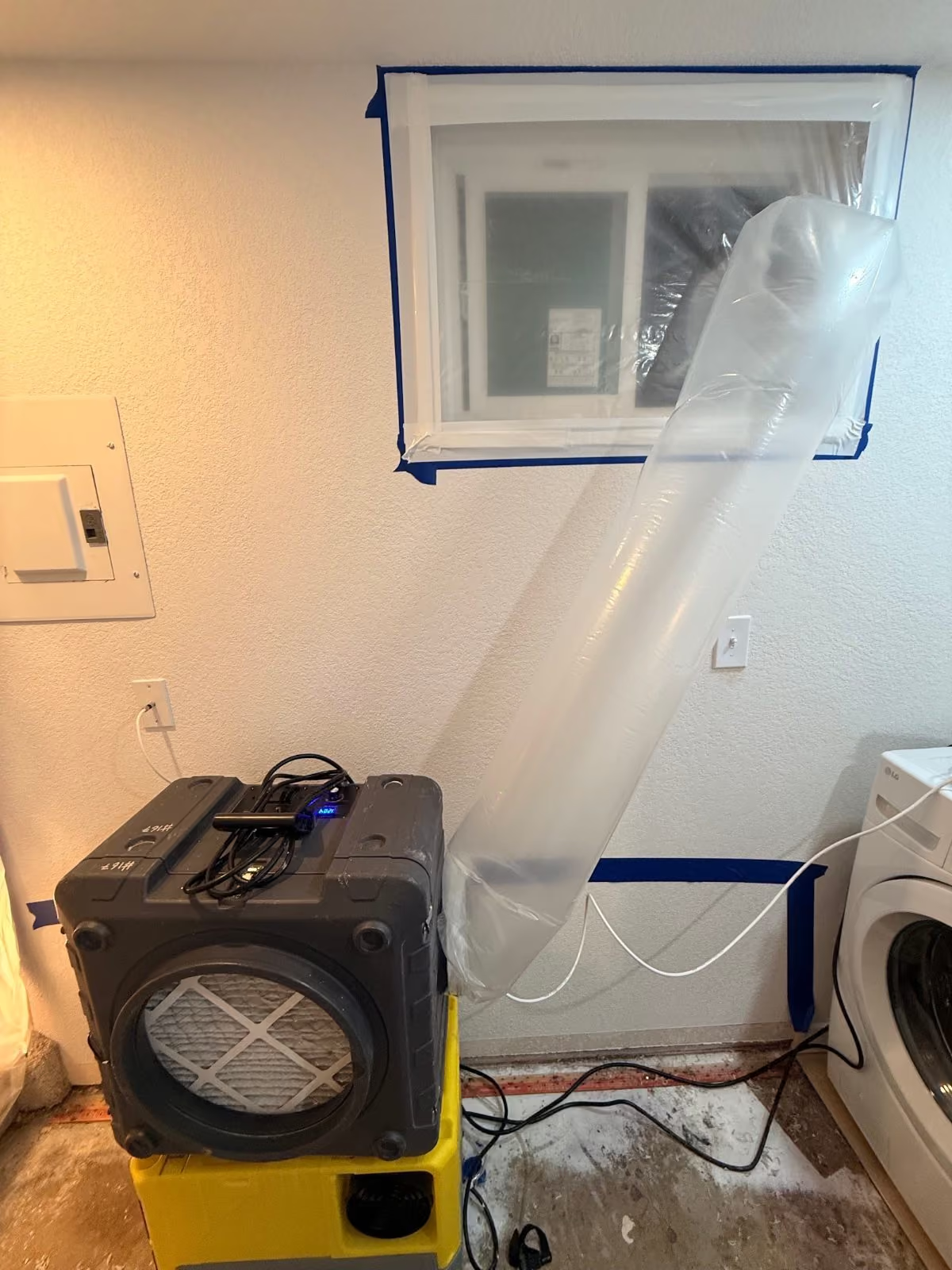
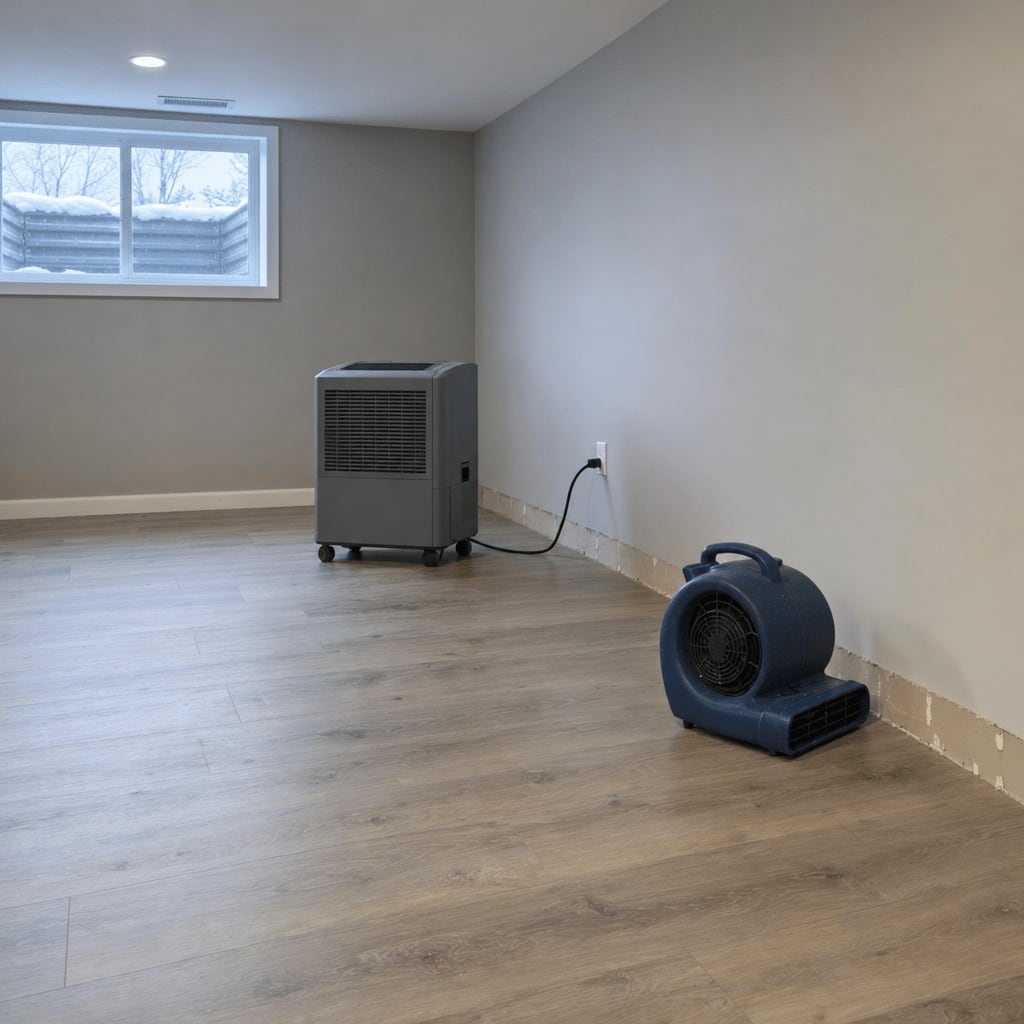
Drying works by pulling water out of materials and into the air, then pulling it out of the air. Two machines do most of that work.
Air movers
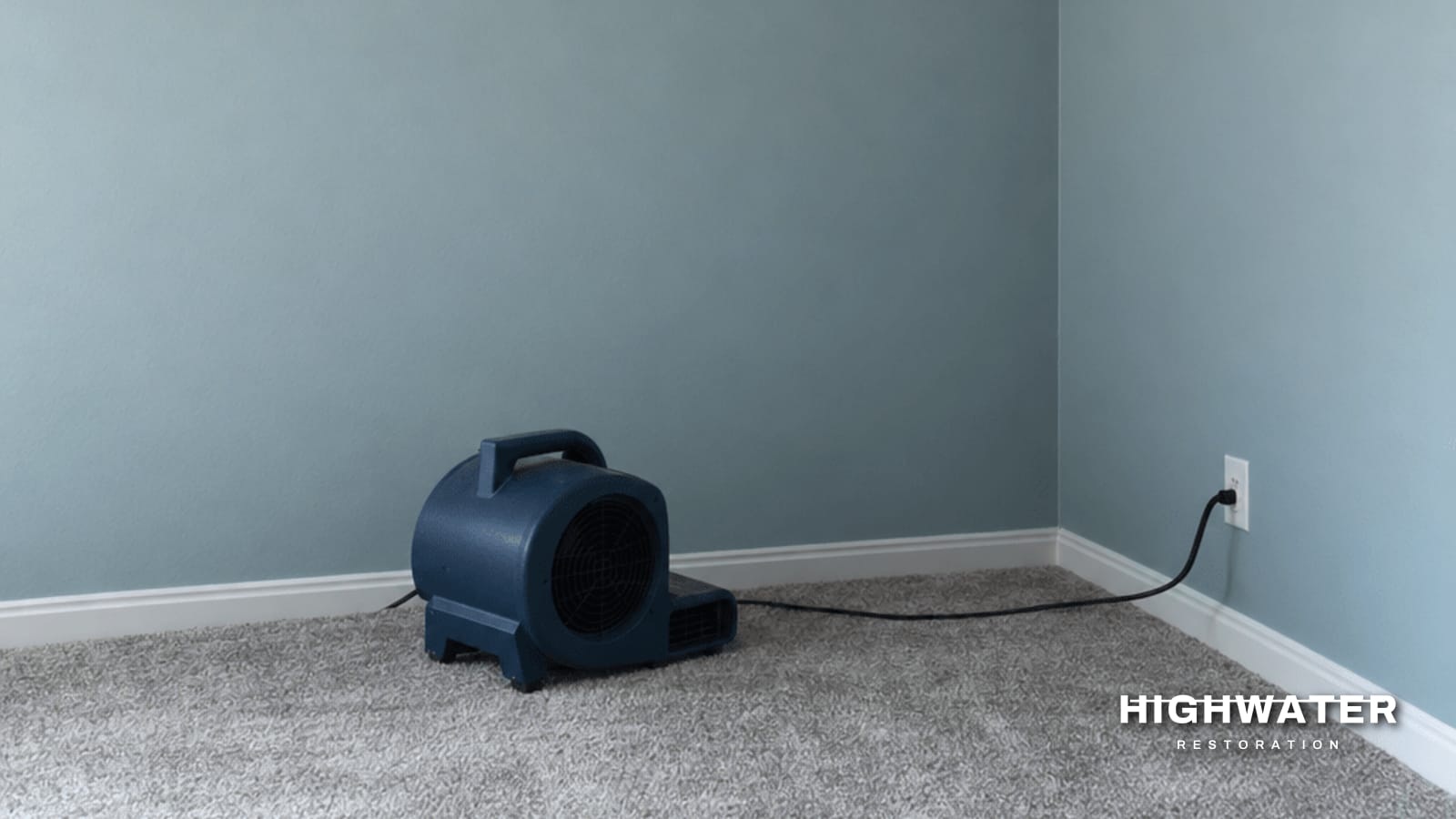
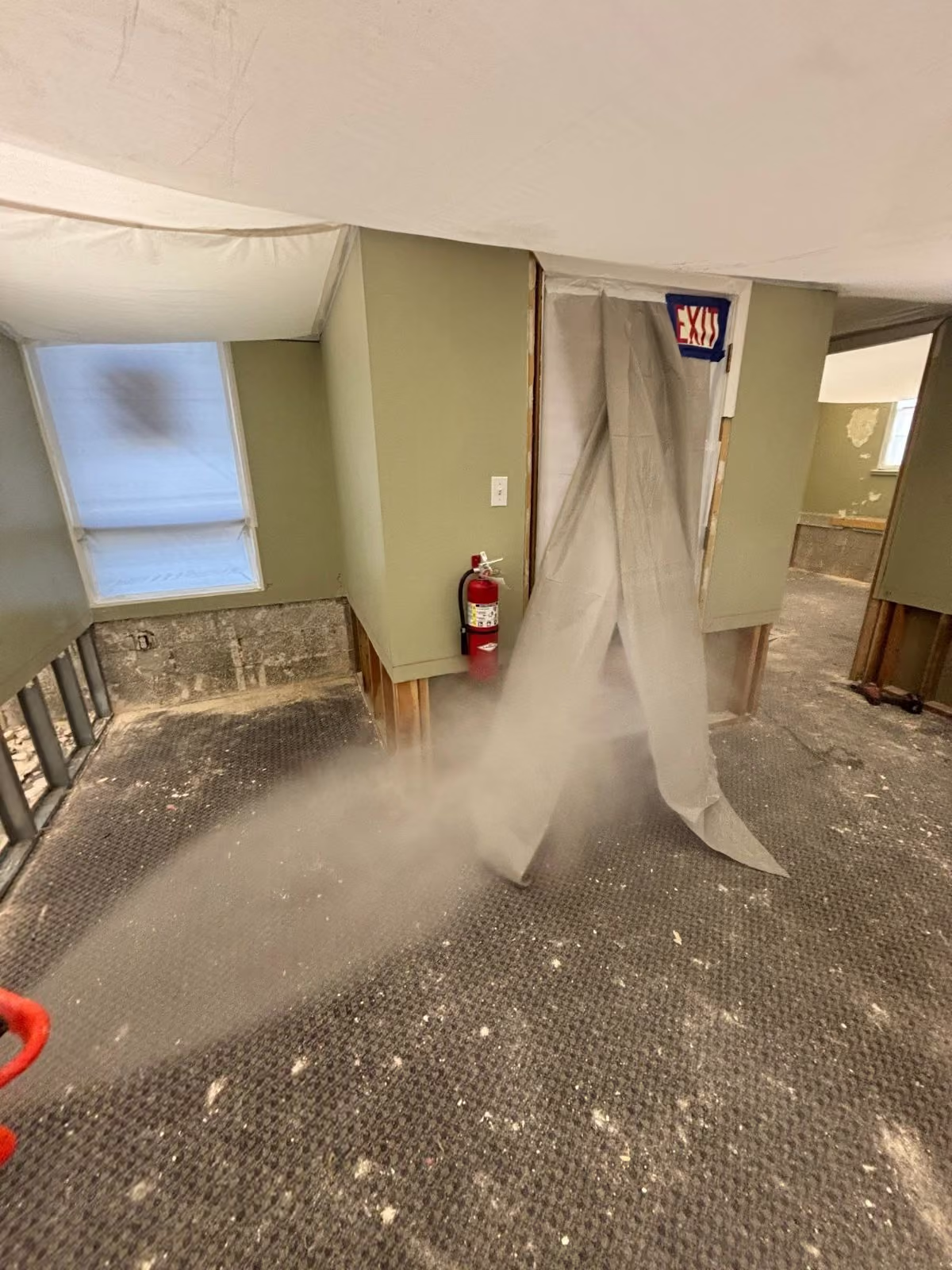
Air movers are low, loud fans aimed along the base of wet walls and across wet floors. Moving air across a wet surface speeds up evaporation, so they are pointed at the materials, not at the middle of the room. Sometimes baseboards or the kick panels under cabinets are removed, or small holes are made low on a wall, so air can reach the cavity behind. Those holes are hidden behind trim when the wall is finished.
Dehumidifiers
Dehumidifiers pull the water that the air movers lift off the materials back out of the air. Without them, that water would settle into other parts of the house. In some rooms, plastic sheeting is put up to close off the wet area so the equipment works on a smaller space.
Why it runs for several days
Wood, drywall and subfloor give up water slowly, from the inside out. A surface can feel dry within a day while the bottom of the wall is still wet. Turning the equipment off early, or moving it to quiet the noise, leaves that water behind. The equipment stays until the readings reach the drying goal, and that can take longer in one room than in another.
The daily readings: dry in place or take it out
Every day, the same spots are measured again and the numbers go on the map. The trend is what matters.
When readings are falling toward the drying goal, the material is drying in place and the equipment stays. When a reading stops moving, the setup is adjusted: equipment is moved, more air is directed into a cavity, or a section is opened up.
Some materials usually have to come out, whatever the readings say:
- Soaked insulation: wet insulation inside a wall holds water and rarely dries well where it is.
- Swollen particleboard: the base of many cabinets and some flooring underlayment swells and breaks down when it gets wet.
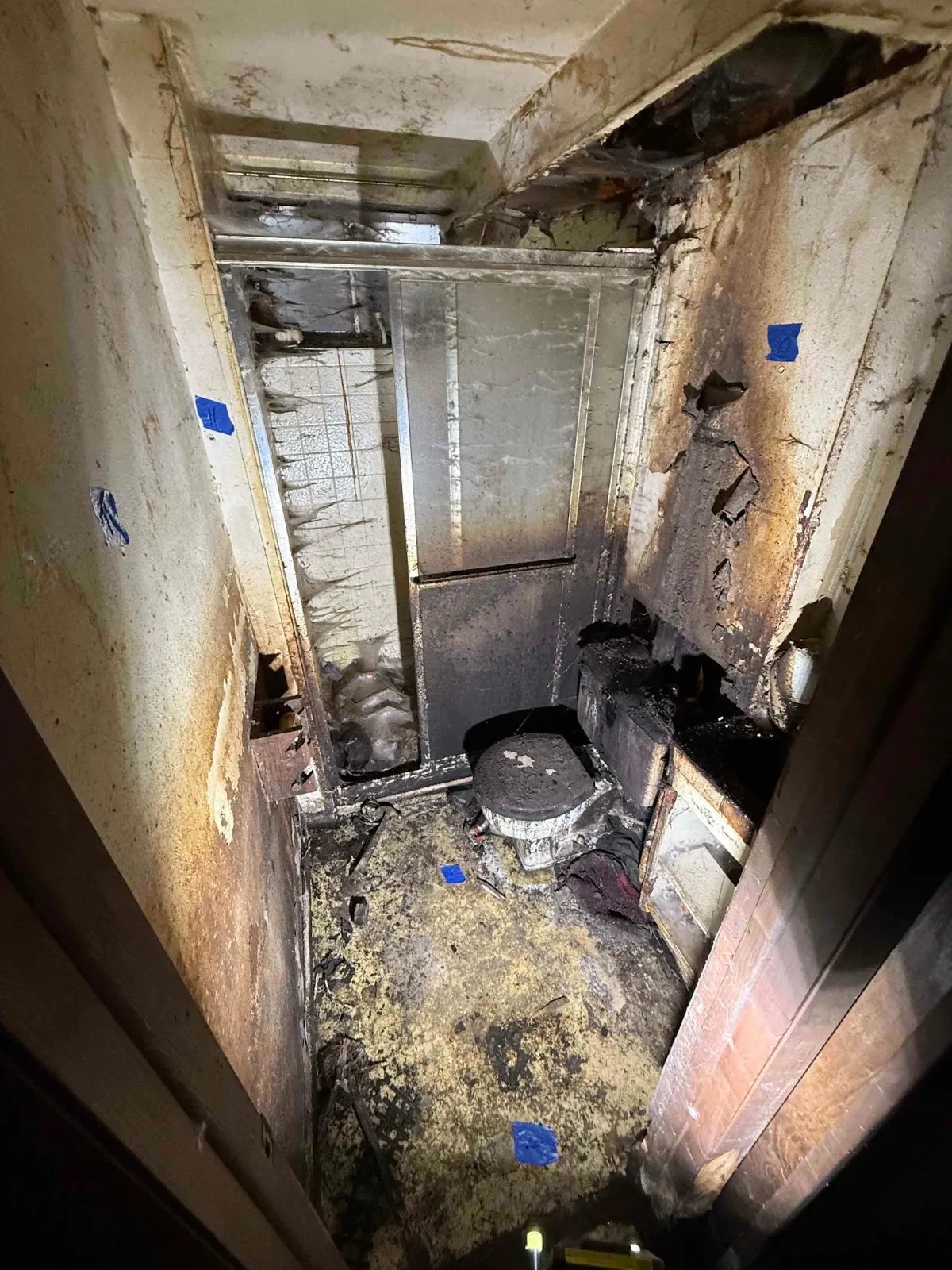
- Materials touched by dirty water: carpet pad, drywall and insulation that met water from a sewer backup or an overflowing toilet are removed rather than dried.
- Anything with mold growth: once growth has started, the job becomes removal, not drying.
Time is part of this decision. Mold can start growing within 48 to 72 hours of the water, and a freeze calls for action immediately, because a split pipe can keep leaking as it thaws. That is why the first steps after a leak, covered in our guide to what to do first in a water emergency, matter so much to how much can be dried in place.
Utah's dry winter air does not dry the inside of a wall
Winter air along the Wasatch is dry, and it is easy to think that means a wet house will dry out on its own. Dry air does help the equipment work, but it can only reach what it touches.
Water that has soaked into the bottom of a wall, the subfloor under vinyl plank, the space under a cabinet or the insulation inside an outside wall is sealed off from that air. The paint can look fine and the floor can feel dry while the framing behind them stays wet. A moisture meter is the only way to know.
It is also why opening windows on a cold day is not a drying plan. Cold outside air can slow drying and put pipes in outside walls at risk of freezing.
What you see and hear each day
The equipment is loud and the rooms run warm, but between visits there is little for you to do. Here is what to expect while the equipment runs:
- A daily visit: a technician takes readings, checks the equipment and adjusts the setup.
- A daily update: you are told what the readings show, what changed since yesterday and what happens next.
- Notice before anything is removed: if a section of drywall, flooring or cabinet has to come out, you hear why, and the reason is recorded.
- A few asks of you: keep the equipment plugged in and running, leave it where it was placed, keep the doors and any plastic sheeting as they were set, and keep the heat on.
What your adjuster gets from those readings
Most of the questions an adjuster asks about the drying can be answered from the record built during these days. That record usually includes the first moisture map, the daily readings, photos of each room, the equipment used and how long it ran, and the reason for each material that was removed.
That record shows the work matched the damage: what was dried, what came out and why. It is also what the rebuild is priced from, and our guide to water damage restoration cost in Utah explains what moves that number. Our guide to working with your adjuster covers what to expect from the inspection and how to keep the file clear, and we'll help you navigate the claim alongside it.
Call Highwater Restoration 24/7 for water mitigation anywhere in the Salt Lake Valley, Park City and Heber City.
Frequently asked questions
These are questions homeowners often ask once the drying equipment is running.
How long does it take to dry out a flooded basement?
It depends on how much water came in, what got wet, how long it sat and how the basement is finished. Concrete, hardwood and finished walls hold water longer than an unfinished space. The equipment comes out when the readings reach the drying goal, not on a set date, so ask for the daily readings to see how close you are.
Will you talk to my adjuster for me?
Yes. We'll help you navigate the claim: we share the moisture map, daily readings and photos with your adjuster and answer their questions about the drying. You stay the policyholder and make the decisions.
Do I have to use the restoration company my insurer recommends?
Your insurer may suggest a company, but in many cases you can choose who works on your home. Check your policy and ask your insurer how it handles your choice, and ask any company you are considering how it documents the drying for your adjuster.